lets reset your pantry
Hello Life Simplifiers!
Your pantry does not need a complete makeover every time it starts to feel a little messy. Often, it just needs a simple reset.
The transition from summer into the back-to-school season is a perfect time to do it. Routines are changing, schedules are filling up, and your household may be reaching for different foods than it did during the slower days of summer.
This is not about removing everything, reorganizing every shelf, or buying matching containers. It is a quick opportunity to clear out what is no longer needed, return items to their homes, and prepare your pantry for the season ahead.
Start With the Obvious
Begin with anything you can address quickly.
Remove:
Empty boxes and packages
Expired food
Stale snacks
Items your household will not use
Recycling or trash
Anything that does not belong in the pantry
You do not need to inspect every item or empty every shelf. Focus on what is immediately noticeable and keep moving.
Return Items to Their Groupings
Next, return misplaced items to their general homes.
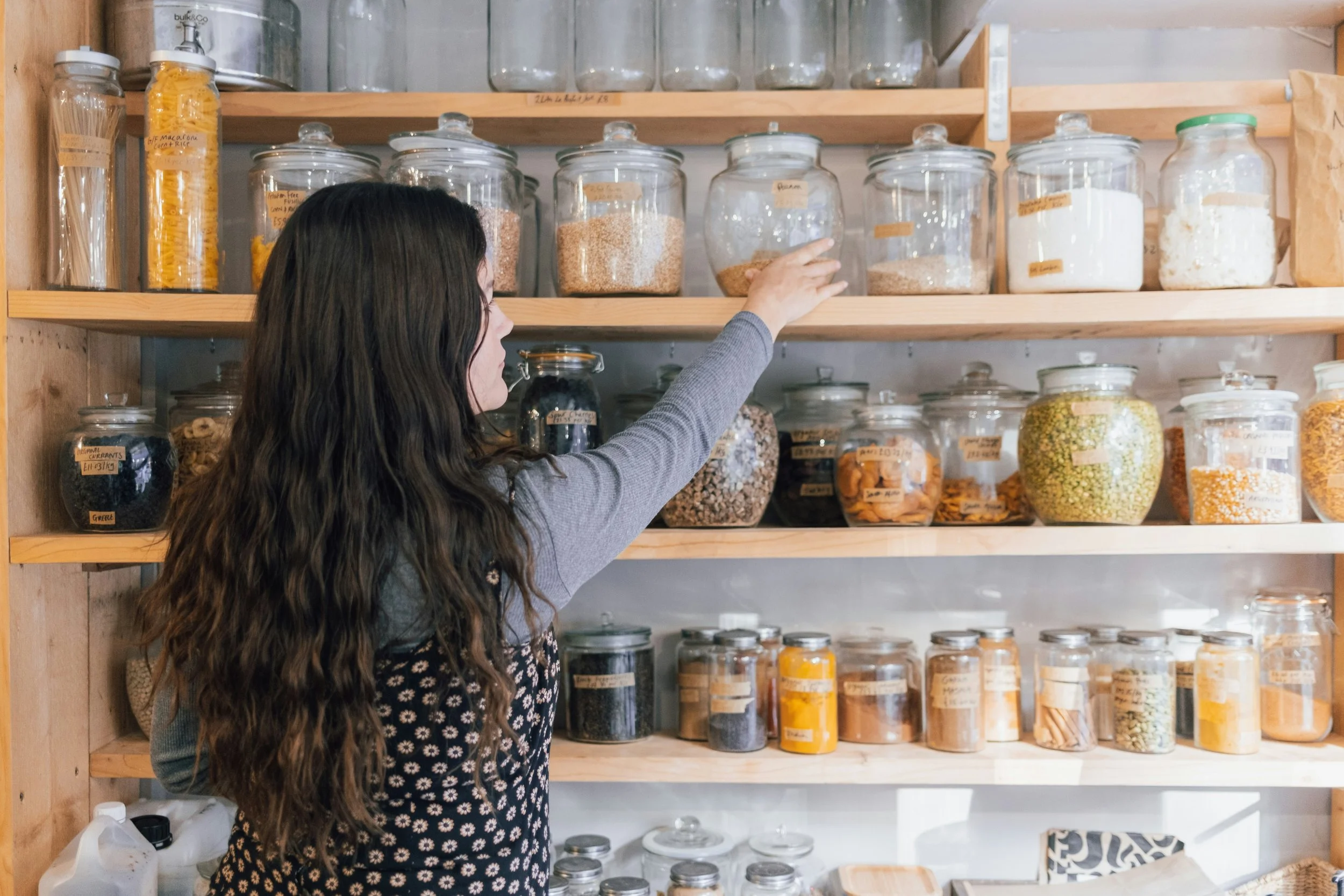
Your pantry groupings do not have to look like anyone else’s. Start with basic categories such as:
Breakfast foods
Snacks
Baking supplies
Pasta, rice, and grains
Canned goods
Sauces and condiments
Dinner staples
Backstock
Work with the groupings you already have. This is a reset, not a complete reorganization.
If a category is overflowing, combine duplicates or move older items toward the front so they are used first.
Create Groupings That Fit Your Life
The most helpful pantry categories are the ones that support how your household actually eats, shops, and moves through the week.
Some of my clients love having an “Eat This Week” bin. This works especially well for meal planners. Place ingredients you plan to use that week in one spot so they are easy to find and less likely to be forgotten.
You might also create groupings for:
Lunch-packing supplies
Quick breakfasts
After-school snacks
Grab-and-go foods for sports and activities
Easy weeknight meals
Frequently used backstock
Foods that need to be eaten soon
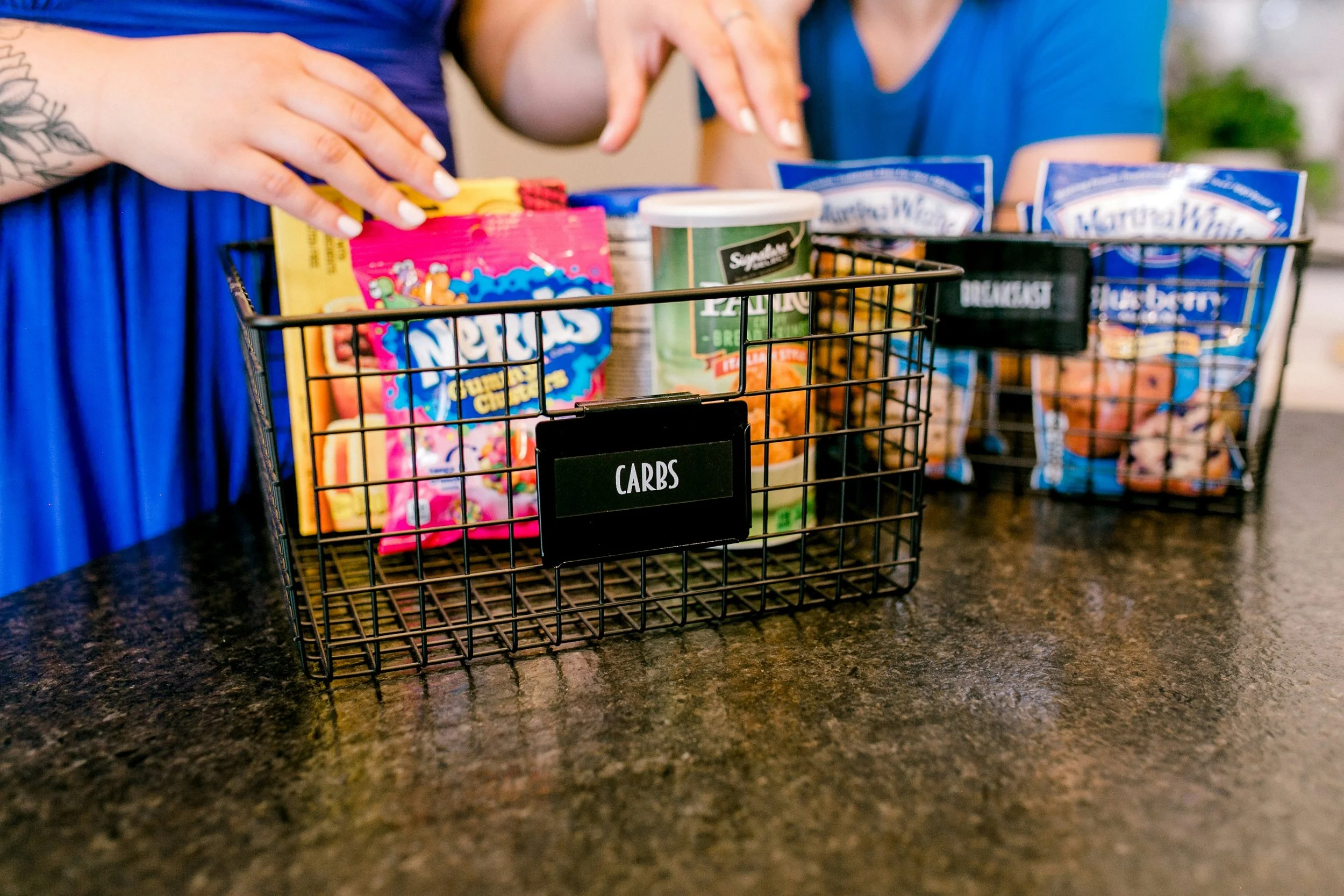
These categories do not need special containers or permanent labels. Use a basket or bin you already have and adjust the grouping when your routine changes.
There is no single right way to categorize a pantry. Your system should make sense for your life and your family.
Create a Kids’ Section
Back-to-school season is a great time to create a pantry section specifically for your children.
Choose a shelf, basket, or bin they can easily reach, then fill it with parent-approved foods they can access independently. Depending on your family, this might include lunchbox snacks, after-school snacks, breakfast options, or grab-and-go foods for activities.
Keeping these foods together can make lunch packing faster and reduce the constant question of what the kids are allowed to eat.
You can also involve your children in the reset. Ask them which foods they actually enjoy, show them where each category belongs, and let them help restock their section.
A system is more likely to last when everyone understands how to use it.
Check Your Seasonal Staples
A new season often brings a change in what we eat.
As summer winds down, you may be reaching less often for picnic supplies and more often for lunch foods, warm breakfasts, baking ingredients, soups, pasta, and easy weeknight meals.
Move the foods you will use during the coming season into the easiest-to-reach areas. Less frequently used items can shift to a higher shelf or toward the back until you need them again.
This small adjustment helps your pantry support the routines you are moving into rather than the season you are leaving behind.
Straighten What Remains
Once everything is back in the correct area, take a few minutes to straighten the shelves.
Turn labels forward, place taller items behind shorter ones, and make frequently used foods easy to reach. Gather loose packets or small items into an existing basket or container if you have one available.
A few small adjustments can make the pantry feel noticeably calmer without creating an entirely new system.
Make a Thoughtful Shopping List
Before restocking for school and the season ahead, take inventory of the foods your household regularly uses.
Add anything that is empty or running low to your grocery list. This helps you avoid buying unnecessary duplicates or stocking up on foods that may not work with your family’s new routine.
You may even want to wait until the first week or two of school has passed before buying large quantities. Preferences and schedules change, and the food you expect everyone to reach for may not be what works once the new routine begins.
Prepare now, then adjust as you go.
Wipe Up the Messes
You do not need to empty every shelf for a deep clean.
Wipe up visible crumbs, sticky spots, or spills. If the floor needs attention, give it a quick sweep or vacuum.
The goal is to leave the pantry fresher than you found it, not turn the reset into an all-day project.
Know When the System Needs to be adjusted
As you work, you may notice that one category no longer fits, a shelf feels too crowded, or certain items never make it back to their assigned homes.
You do not have to solve every problem during this reset. Make a note of anything that may need more attention later.
A reset restores an existing system. A full organizing project creates or changes the system. Knowing the difference keeps a small task from becoming overwhelming.
Reset for the Season Ahead
A simple pantry reset can take just 10 to 20 minutes, but it can make the return to school and busier fall routines feel more manageable.
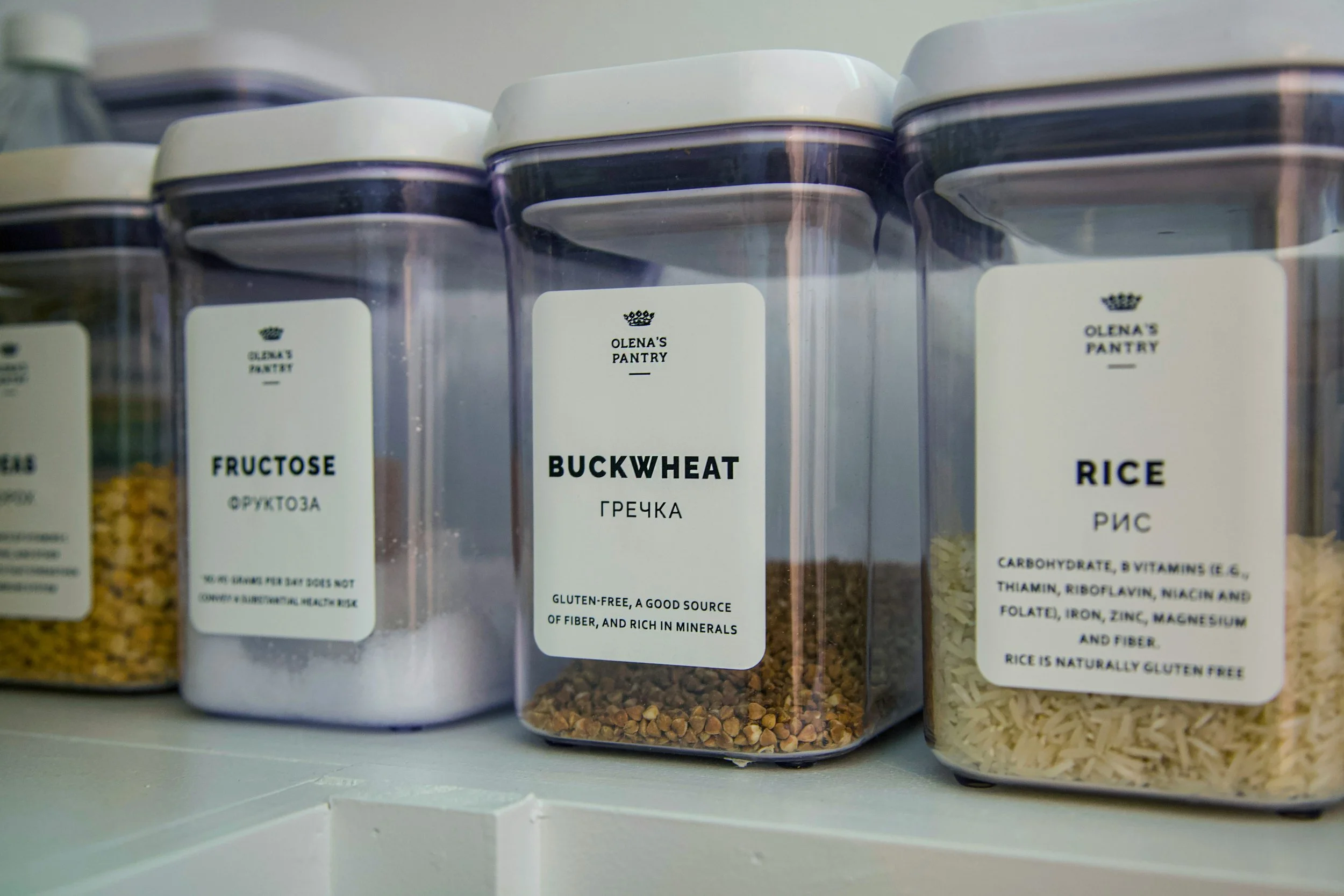
Your pantry does not need matching labels, expensive containers, or perfectly styled shelves. It needs groupings that make sense, everyday foods within easy reach, and a system your household can follow.
The goal is not a picture-perfect pantry. The goal is a pantry that helps you see what you have, find what you need, and move through everyday routines with less effort.
You do not have to predict exactly what the new season will require.
Prepare now, then adjust as you go.